

Did Voter Registation Increase As A Result Of The March On Washington 1963
Ken Howard, a D.C. educatee working a summer task at the postal service office before inbound Howard Academy in the fall, took a motorbus downtown to bring together a massive gathering on the National Mall. "The oversupply was but enormous," he recalls. "Kind of similar the feeling you go when a thunderstorm is coming and you lot know it is going to really happen. There was an expectation and excitement that this march finally would make a deviation."
Only a few months before, in that electric atmosphere of anticipation, 32-year-sometime vocaliser-songwriter Sam Cooke composed "A Modify Is Gonna Come up," the song that would become the canticle of the civil rights movement.
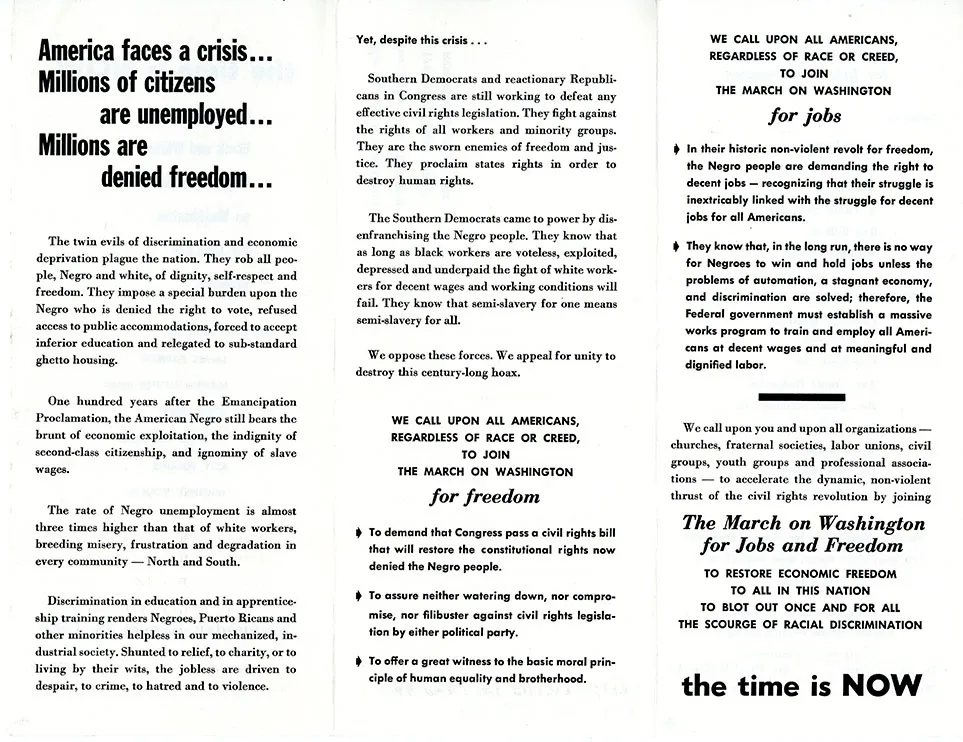
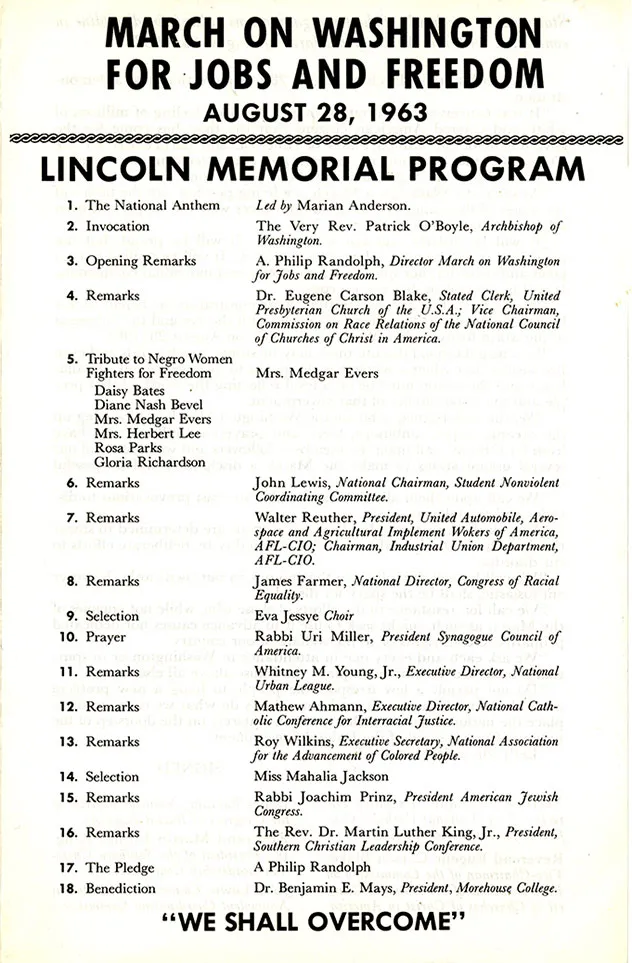
The potent symbolism of a demonstration at the Lincoln Memorial—timed to coincide with the centenary of the Emancipation Proclamation and following President John F. Kennedy's announcement in June that he would submit a civil rights bill to Congress—transfixed the nation. The March on Washington for Jobs and Freedom also catapulted 34-twelvemonth-old Martin Luther King Jr., who set aside prepared notes to declare "I Have a Dream," into the realm of transcendent American orators.
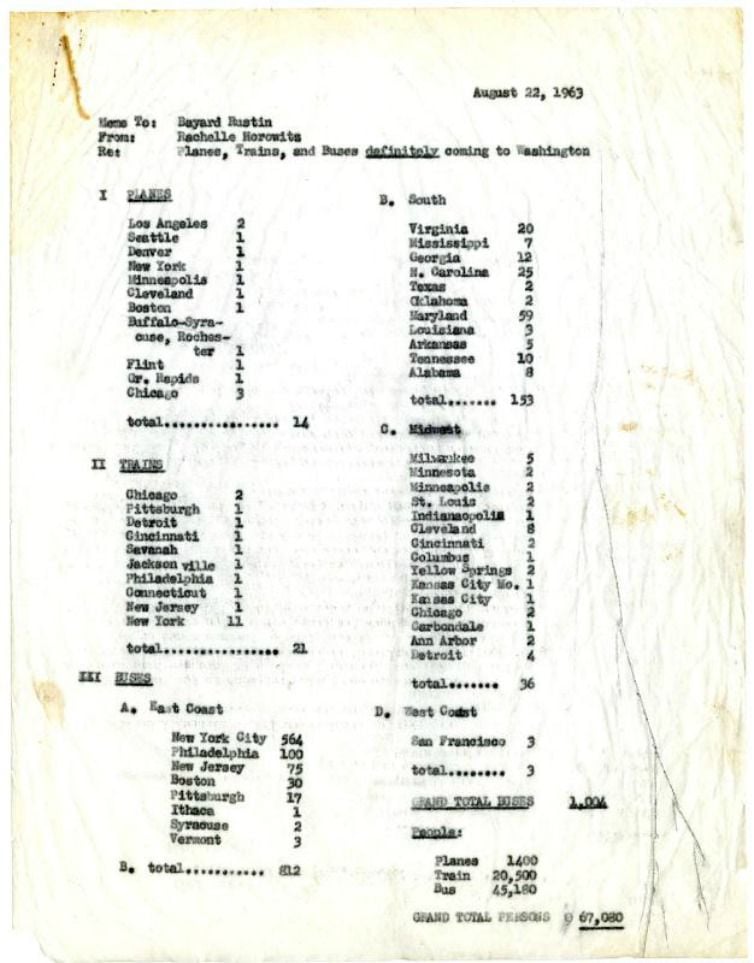
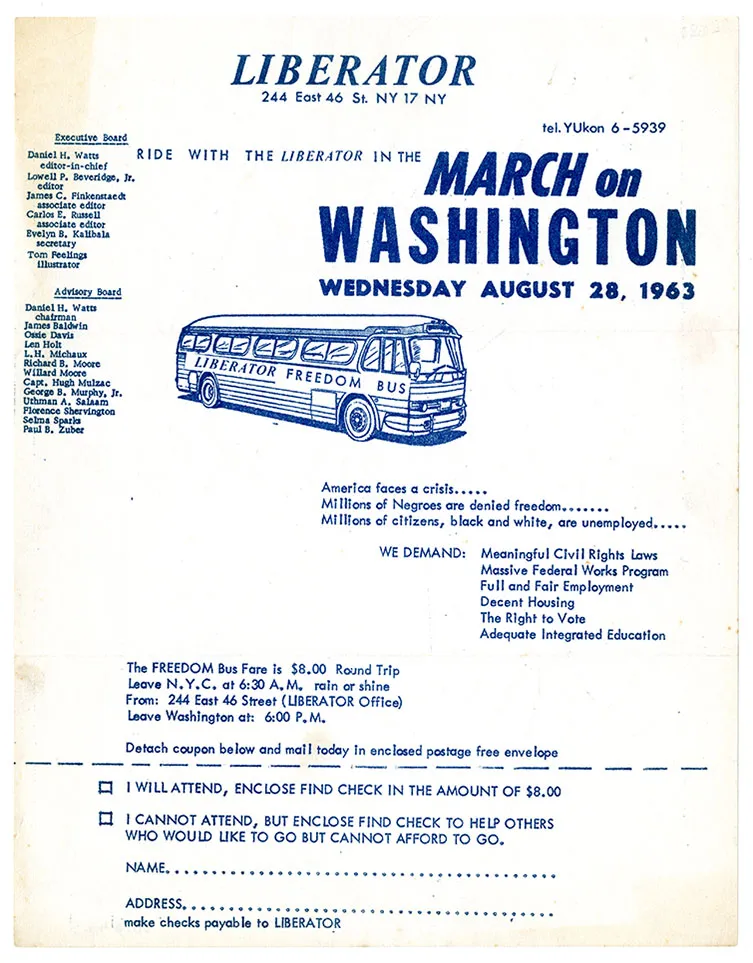
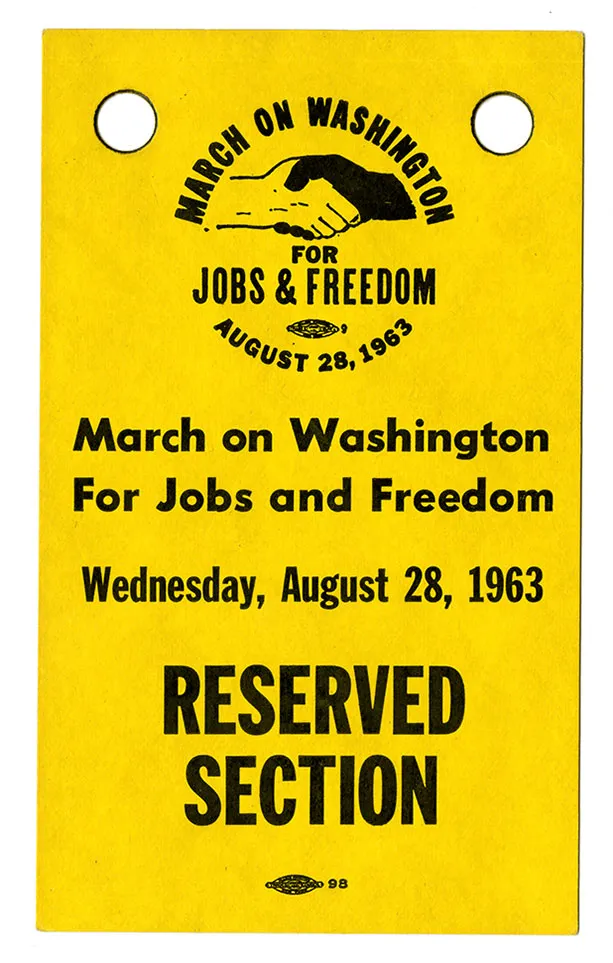
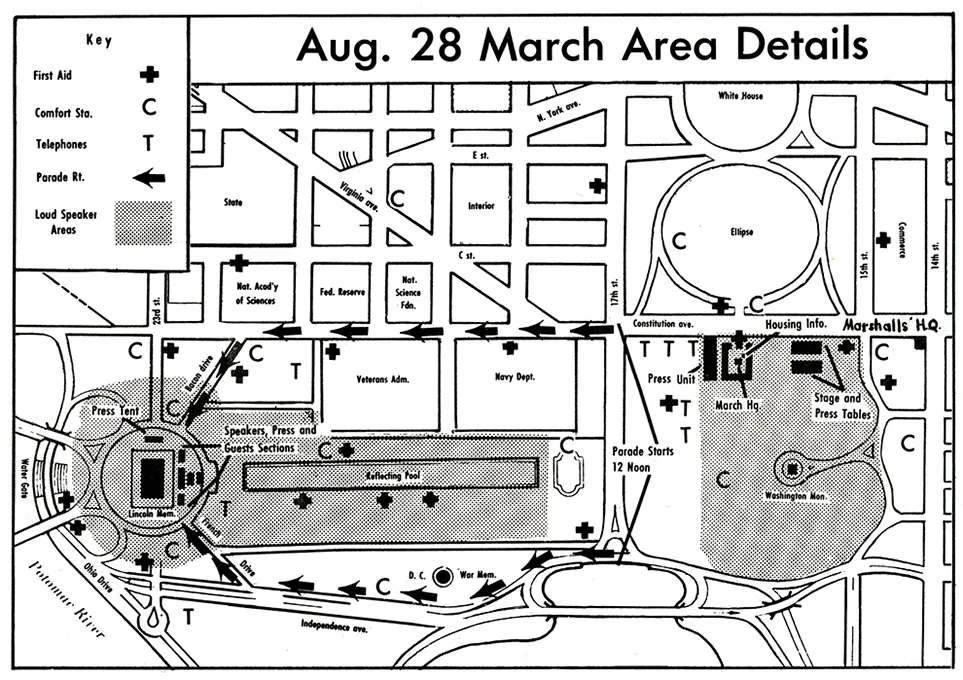
Behind the scenes, the atomic number 82 organizer, Bayard Rustin, presided over a logistical campaign unprecedented in American activism. Volunteers prepared 80,000 50-cent boxed lunches (consisting of a cheese sandwich, a slice of poundcake and an apple). Rustin marshaled more than than two,200 chartered buses, 40 special trains, 22 outset-aid stations, eight 2,500-gallon h2o-storage tank trucks and 21 portable water fountains.
Participants traveled from across the country—young and one-time, black and white, celebrities and ordinary citizens. Everyone who converged on the capital that day, whether or not they recognized their accomplishment at the fourth dimension, stood at a crossroads from which there would be no turning back. Fifty years later, some of those participants—including John Lewis, Julian Bail, Harry Belafonte, Eleanor Holmes Norton and Andrew Young—relived the march in interviews recorded during the past several months in Washington, D.C., New York and Atlanta. Taken together, their voices, from a coalition including the Southern Christian Leadership Conference and the Student Nonviolent Coordinating Commission, assume the force of collective memory.
A 42-yr-quondam photographer, Stanley Tretick, who covered the Kennedy White Business firm for Look magazine, was on the Mall as well. He documented the transformative moment in images unpublished until now, restored to history in Kitty Kelley'southAllow Freedom Ring, a posthumous collection of Tretick'south work from that day. View more of Tretick'southward stunning photographs here.
The demonstrators who sweltered in the 83-degree estrus as they petitioned their government for change—the crowd of at least 250,000 constituted the largest gathering of its kind in Washington—remind us of who we were then as a nation, and where we would move in the struggle to overcome our history. "Information technology's hard for someone these days," says Howard, "to understand what it was like, to suddenly have a ray of light in the dark. That's really what it was like."
Ken Howard:
You accept to back upwardly and call back about what was happening at the time. Nationally, in 1962, you have James Meredith, the first black to attend the University of Mississippi, that was national news. In May 1963, Balderdash Connor with the dogs and the fire hoses, turning them on people, front-page news. And and so in June, that summertime, you lot have Medgar Evers shot down in the S, and his body really on view on 14th Street at a church in D.C. And then you had a group of individuals who had been not just oppressed, but discriminated against and killed because of their color. The March on Washington symbolized a ascent up, if you volition, of people who were maxim enough is enough.
Rachelle Horowitz, Aide to Bayard Rustin (afterward a labor matrimony official):
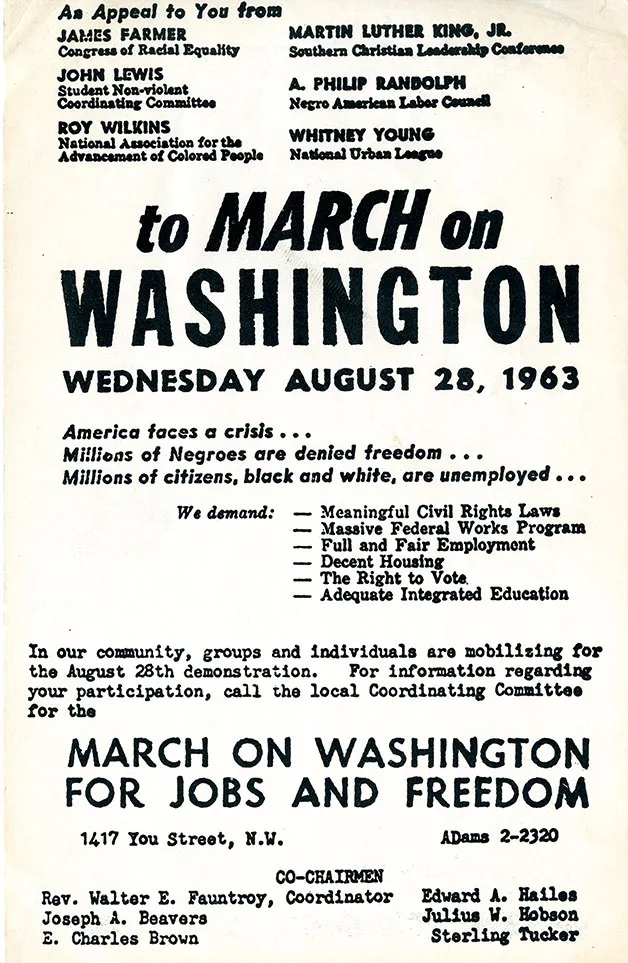
A. Philip Randolph [president of the Brotherhood of Sleeping Motorcar Porters] had tried to put on a march in 1941 to protest bigotry in the armed forces and for a off-white employment policy commission. He chosen off that march when FDR issued an executive club [prohibiting bigotry in the national defense industry]. Simply Randolph always believed that you lot had to move the civil rights struggle to Washington, to the center of power. In Jan 1963, Bayard Rustin sent a memo to A. Philip Randolph in essence saying the time is now to really conceive of a big march. Originally it was conceived of as a march for jobs, but as '63 progressed, with the Birmingham demonstrations, the assassination of Medgar Evers and the introduction of the Ceremonious Rights Act by President Kennedy, information technology became clear that it had to be a march for jobs and freedom.
Eleanor Holmes Norton (SNCC Activist, later a 12-term D.C. delegate to Congress) :
I was in police school, I was in Mississippi in the delta working on the predecessor for the workshops that were to accept identify a yr afterwards in the Freedom Summertime. I got a telephone call from one of my friends in New York who said, "You need to be here, Eleanor, considering nosotros are developing the March on Washington." So I spent part of the summer in New York, working on this truly fledgling March on Washington. Bayard Rustin organized it out of a brownstone in Harlem; that was our office. When I await back now, I am all the more impressed with the genius of Bayard Rustin. I do not believe that in that location was another person involved with the move who could have organized that march—the quintessential organizer and strategist. Bayard Rustin was maybe the only openly gay man I knew. That was simply "not respectable," so he was attacked by Strom Thurmond and the Southern Democrats, who sought to become at the march by attacking Rustin. To the credit of the civil rights leadership, they closed in effectually Rustin.
"We're going to walk together. We're going to stand up together. We're going to sing together. We're going to stay together." —The Rev. Fred Shuttlesworth (Radio transcript excerpts (in block quotes) courtesy of WGBH Media Library and Archives)
John Lewis, Chairman of SNCC (later on a xiii-term congressman from Georgia)
A. Philip Randolph had this idea in the back of his listen for many years. When he had his take a chance to brand another demand for a March on Washington, he told President Kennedy in a meeting at the White Business firm in June 1963 that we were going to march on Washington. Information technology was the and then-called "Big Vi," Randolph, James Farmer, Whitney Young, Roy Wilkins, Martin Luther King Jr. and myself. Out of the blue Mr. Randolph spoke up. He was the dean of black leadership, the spokesperson. He said "Mr. President, the black masses are restless and we are going to march on Washington." President Kennedy didn't like the idea, hearing people talk about a march on Washington. He said, "If you lot bring all these people to Washington, won't in that location be violence and chaos and disorder and nosotros will never become a civil rights bill through the Congress?" Mr. Randolph responded, "Mr. President, this will be an orderly, peaceful, nonviolent protest."
"The March on Washington is not the climax of our struggle, but a new beginning not only for the Negro but for all Americans who thirst for freedom and a better life. When we leave, it volition be to carry on the civil rights revolution home with us into every nook and cranny of the land, and we shall return again and again to Washington in ever growing numbers, until total liberty is ours." —A. Philip Randolph
Harry Belafonte, Activist and entertainer
Nosotros had to seize this opportunity and make our voices heard. Brand those who are comfortable with our oppression—make them uncomfortable—Dr. Rex said that was the purpose of this mission.
Andrew Young, Aide to King at the Southern Christian Leadership Briefing (later a diplomat and human rights activist)
Dr. Randolph's march basically was an attempt to transform a black Southern civil rights movement into a national movement for human rights, for jobs and liberty. And anti-segregation. So it had a much broader base— the programme was to include not only SCLC but all of the ceremonious rights organizations, the trade wedlock move, the universities, the churches—nosotros had a big contingent from Hollywood.
Julian Bond, communications director, SNCC (later a University of Virginia historian)
I idea it was a swell thought, but inside the organisation, SNCC, information technology was thought to be a distraction from our chief work, organizing people in the rural S. Simply John [Lewis] had committed united states to it, and nosotros would go with our leadership and nosotros did.
Joyce Ladner, SNCC activist (later a sociologist)
At that point, the constabulary all over Mississippi had croaky down so hard on usa that it was more and more than difficult to raise bond money, to organize without harassment from the local cops and the racists. I thought a big march would demonstrate that we had support exterior our modest grouping.
Rachelle Horowitz
As we started planning the march, we started getting letters from our beloved friends in the Senate of the United states, people who were advocates of ceremonious rights. Senator Paul Douglas of Illinois, Phil Hart of Michigan, Hubert Humphrey of Minnesota. The letters began either "Dear Mr. Randolph" or "Dear Bayard: We remember that it'due south very important to pass the civil rights bill and we believe very strongly in what you are doing, merely have y'all considered the difficulty of bringing in 100,000 people in Washington? Where will they use the bathrooms? Where will they go water?" Every alphabetic character was identical. Bayard began to refer to them as "latrine letters," and we put latrine letters on the side. They were inspirational in one way, in that Bayard arranged to rent scores of portable johns. We plant out later that Senator Paul Douglas' son, John Douglas, was working in the Justice Department. He and a guy named John Reilly were writing these letters and giving them to the senators to transport to united states. Before robo-blazon, there were these letters.
Harry Belafonte
To mobilize the cultural strength backside the crusade—Dr. King saw that every bit hugely strategic. Nosotros use glory to the advantage of everything. Why non to the advantage of those who need to be liberated? My task was to convince the icons in the arts that they needed to have a presence in Washington on that day. Those that wanted to sit on the platform could practice that, but we should be in amidst the citizens—the ordinary citizens—of the 24-hour interval. Somebody should just turn around and at that place was Paul Newman. Or turn around and at that place was Burt Lancaster. I went outset to one of my closest friends, Marlon Brando, and asked if he would exist willing to chair the leading delegation from California. And he said yes. Not but enthusiastically only committed himself to really working and calling friends.
"I'grand speaking at the moment with Mr. Percy Lee Atkins of Clarksdale, Mississippi: 'I came considering nosotros want our freedom. What's it going to accept to accept our liberty?'" —Radio reporter Al Hulsen
Juanita Abernathy, Widow of Southern Christian Leadership Conference co-founder the Rev. Ralph Abernathy (later a corporate executive)
We were there [in Washington] two days prior. We flew up [from Atlanta]. They expected united states of america to be fierce and for Washington to be torn upwards. But everybody had been told to remain nonviolent, just as we had been throughout the movement.
John Lewis
I started working on my speech several days earlier the March on Washington. We tried to come up with a speech that would stand for the young people: the foot soldiers, people on the front end lines. Some people call us the "shock troops" into the delta of Mississippi, into Alabama, southwest Georgia, eastern Arkansas, the people who had been arrested, jailed and beaten. Not simply our own staffers but also the people that we were working with. They needed someone to speak for them.
The night before the march, Bayard Rustin put a note under my door and said, "John, you should come downstairs. There's some discussion nearly your voice communication, some people accept a problem with your speech."
The archbishop [of Washington, D.C.] had threatened not to requite the invocation if I kept some words and phrases in the oral communication.
In the original spoken communication I said something similar "In good conscience, we cannot back up the administration's proposed civil rights bill. It was besides picayune, too late. It did not protect old women and immature children in nonviolent protests run down by policemen on horseback and police dogs."
Much farther down I said something similar "If we do not meet meaningful progress here today, the day will come when we volition non confine our marching on Washington, but we may be forced to march through the South the way General Sherman did, nonviolently." They said, "Oh no, yous tin can't say that; information technology's besides inflammatory." I remember that was the business organization of the people in the Kennedy assistants. We didn't delete that portion of the speech. We did non until nosotros arrived at the Lincoln Memorial.
Joyce Ladner
The 24-hour interval earlier the March, my sister and Bobby Dylan, who was her good friend, went to a fund-raiser that nighttime. She met Sidney Poitier; he was very, very involved with SNCC, equally was Harry Belafonte. The next morning, we picketed the Justice Department because three of our SNCC workers were in jail in Americus, Georgia, for sedition, "overthrowing the authorities." If you tin can imagine, people who were 18, 19, xx years old, close friends, who were arrested for overthrowing the regime, the state? They had non been able to go bail. Nosotros were terrified that they would in fact be charged and sent up for a long fourth dimension. So we picketed in an endeavor to draw attention to their plight.
Rachelle Horowitz
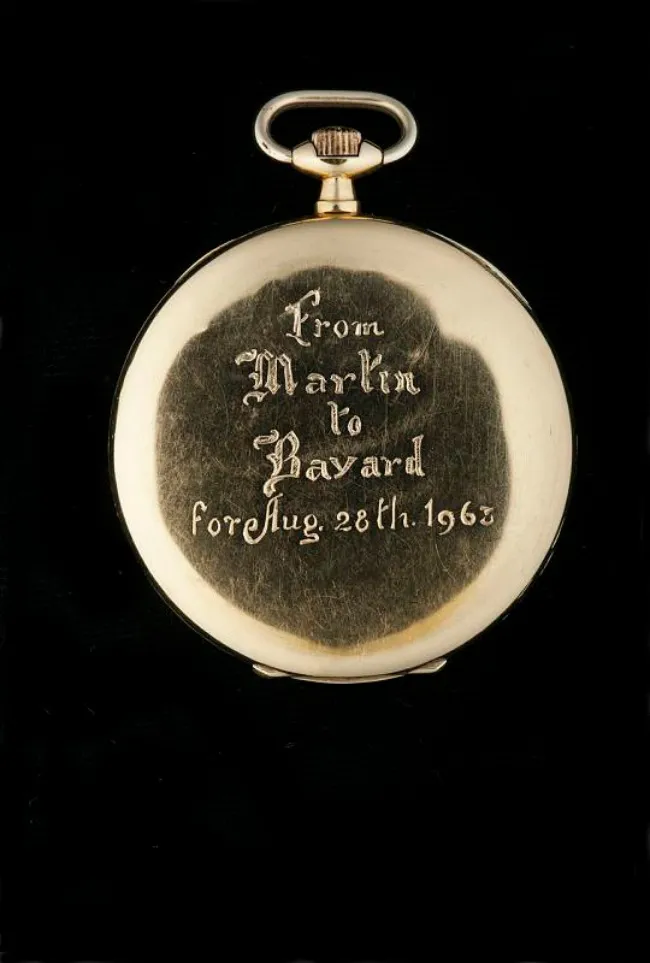
It was about 5:thirty in the morning, it'southward gray, it's muggy, people are setting up. At that place'due south nobody there for the march except some reporters and they get-go annoying Bayard and pestering him: "Where are the people, where are the people?" Bayard very elegantly took a piece of newspaper out of his pocket and looked at information technology. Took out a pocket watch that he used, looked at both and said, "Information technology's all coming according to schedule," and he put it abroad. The reporters went away and I asked, "What were you looking at?" He said, "A blank piece of newspaper." Sure enough, eventually, about 8:30 or 9, the trains were pulling in and people were coming up singing and the buses came. In that location'south always that moment of "We know the buses are chartered, simply will they actually come?"
"At 7 o'clock, the offset ten people were here. They brought their own folding chairs and are to my left down near the Reflecting Pool. The Reflecting Puddle early this morning is very calm and then gives a nice reflection of the Washington Monument. There are apparently fish or some sort of fly in the Reflecting Pool because every few minutes yous run across fiddling wavelets in the middle." —Radio reporter David Eckelston
Courtland Cox, SNCC activist (later civil servant and man of affairs)
Bayard and I left together. Information technology was real early, maybe half dozen or seven in the morn. We went out to the Mall and there was literally no one there. Nobody there. Bayard looks at me and says, "Y'all think anybody is coming to this?" and just as he says that, a group of immature people from an NAACP chapter came over the horizon. From that time, the period was steady. Nosotros institute out that we couldn't come across anyone there because then many people were in buses, in trains and, especially, on the roads, that the roads were clogged. Once the menses started, it was just volumes of people coming.
"All sorts of dress is axiomatic, from the Ivy League conform to overalls and harbinger hats and even some Texas ten-gallon hats. Quite a few people are carrying knapsacks, blankets and so on, patently anticipating a not as well comfortable trip home tonight." —Radio reporter Al Hulsen
Barry Rosenberg, Civil rights activist (later a psychotherapist)
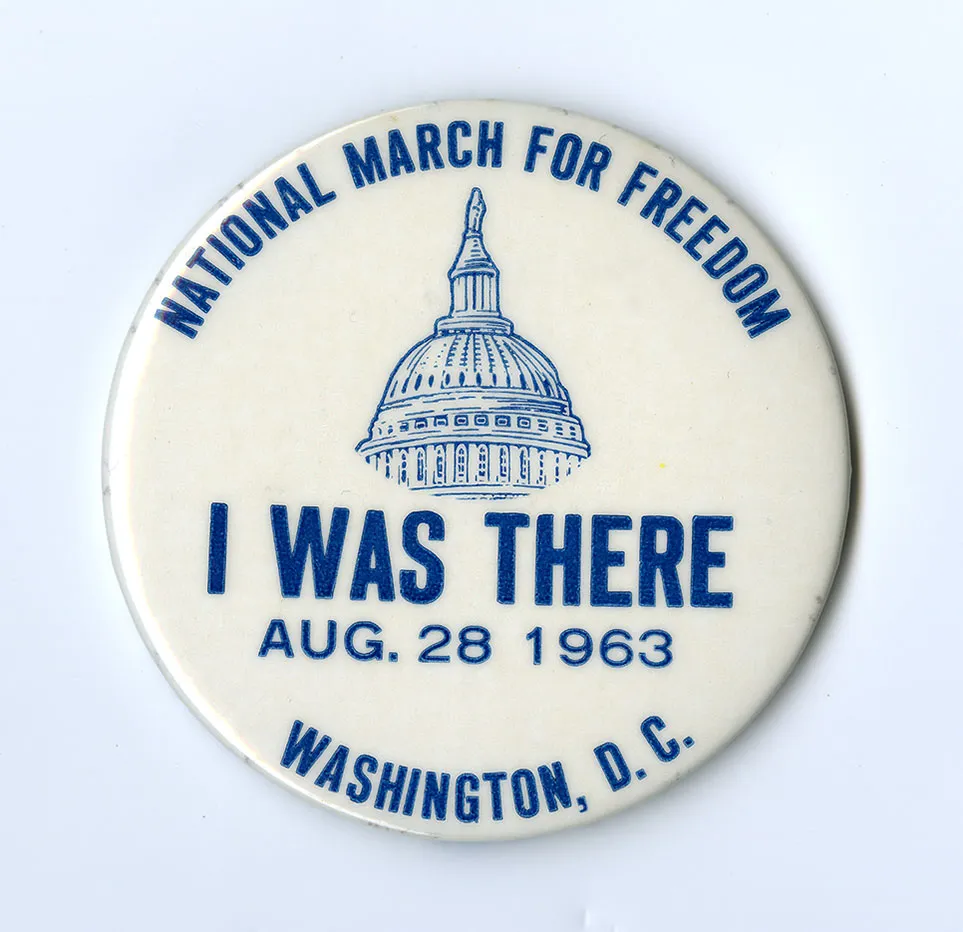
I could hardly sleep the night before the march. I got there early. Maybe ten:30 in the morn, people were milling around. There were peradventure 20,000 folks out there. It was Baronial; I forgot to wear a hat. I was a little concerned nigh getting burned up. I went and got a Coke. When I got back, people just poured in from all directions. If you were facing the podium, I was on the right-manus side. People were greeting each other; I got chills, I got high-strung upwards. People were hugging and shaking hands and asking "Where are y'all from?"
"1 woman from San Diego, California, showed us her plane ticket. She said her grandfather sold slaves and she was hither 'to help wipe out evil.' " —Radio reporter Arnold Shaw
John Lewis
Early that morning the 10 of us [the Big Six, plus iv other march leaders] boarded cars that brought us to Capitol Loma. Nosotros visited the leadership of the House and the Senate, both Democrats and Republicans. In improver, we met on the Business firm side with the chairman of the judiciary committee, the ranking fellow member, because that's where the ceremonious rights legislation will come. We did the same thing on the Senate side. We left Capitol Hill, walked downward Constitution Avenue. Looking toward Union Station, we saw a sea of humanity; hundreds, thousands of people. We thought nosotros might go 75,000 people showing upward on August 28. When nosotros saw this unbelievable oversupply coming out of Union Station, we knew it was going to be more than than 75,000. People were already marching. It was like "There get my people. Let me take hold of up with them." We said, "What are we going to exercise? The people are already marching! There go my people. Let me catch up with them." What nosotros did, the ten of us, was grab each other'southward artillery, made a line across the bounding main of marchers. People literally pushed us, carried us all the way, until we reached the Washington Monument and and so we walked on to the Lincoln Memorial.
Joyce Ladner
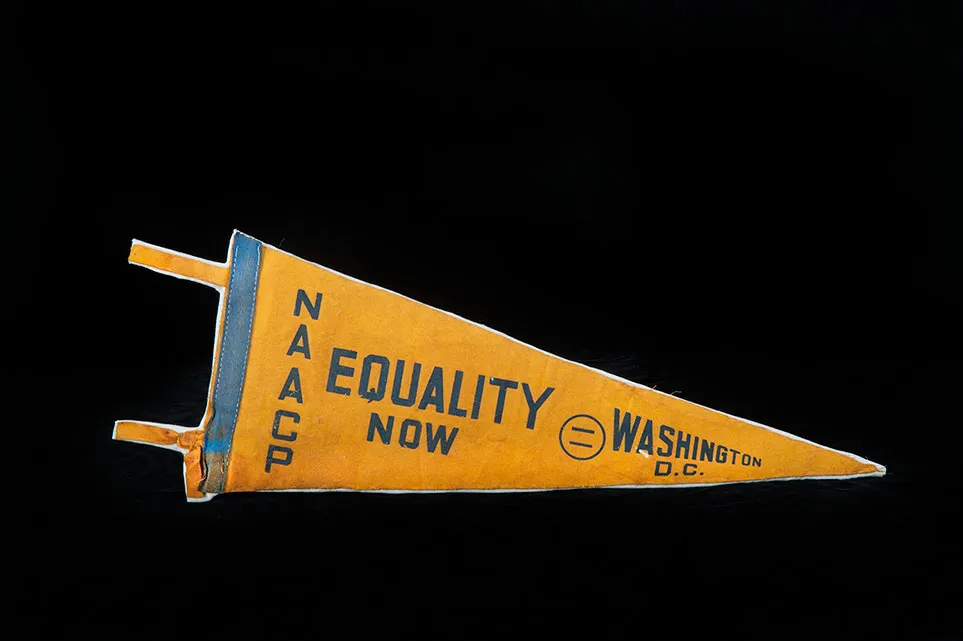
I had a stage pass, so I could go on the podium. Just standing upwards at that place looking out at not very many people, and then merely all of the sudden, hordes of people started coming. I saw a group of people with large banners. Philadelphia NAACP could have been one section, for example, and they did come in large groups. As the day passed a lot of individual people were at that place. Odetta and Joan Baez and Bobby Dylan. They began warming upwards the crowd very early on, began singing. Information technology was not tense at all, wasn't a picnic either. Somewhere in between; people were happy to come across each other, renewing acquaintances, everyone was very pleasant.
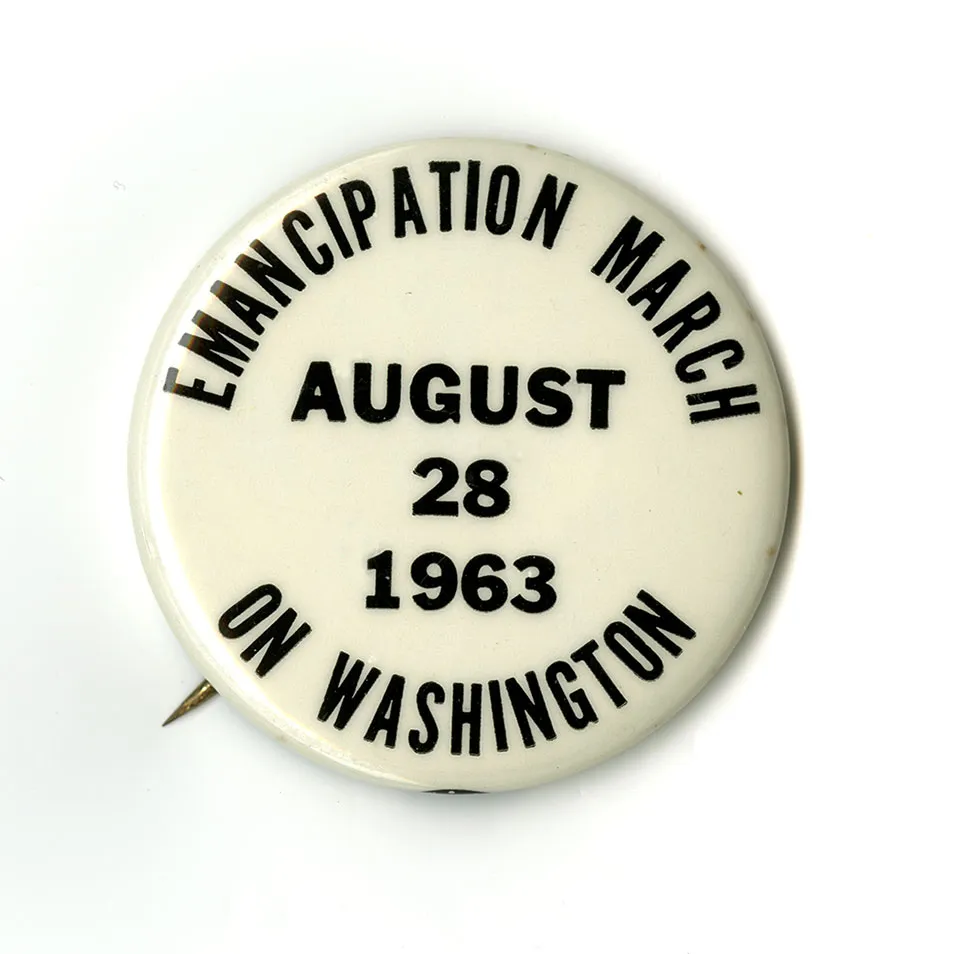
"Many people [are] sitting, picnicking forth the Reflecting Puddle steps below the Monument. People with headbands, arm bands, buttons all around, just in a happy holiday temper." —Radio reporter Arnold Shaw
Ken Howard
At the post office that summertime. I'd been working all twenty-four hour period. I got on the bus [to downtown]. I was hot, sweaty, but I was determined that I was going to the march. The crowd was enormous. There were rumors, apparently substantiated, that agents of the government, intelligence agents, were actually taking pictures. Some of those individuals took pictures of me. More power to them. I had goose egg to fear. I was at least in partial uniform with my postal hat [pith helmet] and shirt on.
"The crowd does seem to exist picking up now. It'south getting thicker and you can hear them singing now in the groundwork, 'Glory, Glory Hallelujah.' " -- Radio reporter Jeff Guylick
Eleanor Holmes Norton
The crowd stretched so far along the Tidal Bowl that you knew you could not look at the finish of it. I was sitting where the march began, at the Lincoln Memorial. I saw that crowd from Lincoln's statue itself and you could not encounter the terminal man or woman on the Mall. That was a sight far beyond a dream in civil rights.
"It'southward a pleasure being here and overnice being out of jail. And to be honest with y'all, the last fourth dimension I've seen this many of us, Bull Connor was doing all the talking." —Activist and comedian Dick Gregory
Juanita Abernathy
I don't know where that march started out. Information technology looked like nosotros marched forever before we got to the Mall. You were used to marching; you wear comfy shoes so your feet won't hurt and you don't get blisters. We got to the phase and Coretta [Scott King] and I sat on the second row. Mahalia [Jackson] saturday on the first row, because she was singing. We were on the left side of the phase. I wanted to scream, we were so happy, nosotros were ecstatic. We had no idea it would be that many people—every bit far as you could run across there were heads. What I called a ocean of people; considering all yous could see was people, everywhere, just a sea of heads and what jubilation. Which said to u.s.a. in the civil rights movement: "Your piece of work has not been in vain. We are with you. We are part of you."
"The unabridged grass expanse from the Lincoln Memorial of the ane mile to the Washington Monument is at present filled with people. Some of the marchers are now in the trees in forepart of the Lincoln Memorial." -- Radio reporter Al Hulsen
John Lewis
Information technology was at the back side of Mr. Lincoln that Mr. Randolph and Dr. King said to me, "John, they yet have a trouble with your spoken communication. Can we alter this, tin can nosotros change that?" I loved Martin Luther King, I loved and admired A. Philip Randolph, and I couldn't say no to those two men. I dropped all reference to marching through the South the manner Sherman did. I said something like "If we exercise non run across meaningful progress here today, nosotros will march through cities, towns and hamlets and villages all across America." I was thinking about how I was going to deliver the speech. I was 23 years onetime and it was a bounding main of humanity out there that I had to face.
"The Rev. Dr. Martin Luther King Jr., president of the Southern Christian Leadership Conference, is now on height of ane of the television set platforms above the crowd. He's waving. The crowd is waving back to him." —Radio reporter Al Hulsen
Rachelle Horowitz
A. Philip Randolph gave a speech that is just ignored likewise much. He gave the speech for jobs and economic rights, and he did information technology with incredible power. Then my heart was in my mouth for John Lewis, the and so 23-yr-one-time SNCC leader from Troy, Alabama. If you wait at that speech today, it was still the most radical. And then of form Dr. Rex was the culmination. Mahalia Jackson sang, non to be believed. If you lot look at clips of the march, y'all encounter Bayard running around and talking, he never stopped. He's organizing everything except when Mahalia sings.
Courtland Cox
What'due south interesting was non simply the crowd all the way to the Reflecting Pool, merely that people were upwards in copse, they were everywhere. When King started speaking, and equally he was speaking, Mahalia Jackson began similar a chant and response. She was like his amen corner. She kept saying "Tell 'em Rev" the whole time he was speaking. She was just talking to him.
"And then far police force estimate 110,000 people, but judging past the crowd that surrounds the Reflecting Pool, now information technology looks like it's well over that, and might be the largest demonstration ever held in the nation's capital." —Radio reporter George Geesey
Julian Bond
When Dr. King spoke, he allowable the attending of everybody there. His speech communication, with his ho-hum, tedious cadence at first and then picking up speed and going faster and faster. You saw what a magnificent speechmaker he was, and you lot knew something of import was happening.
"When Martin Luther King addressed the people hither, people rose and came right over to the loudspeakers, and applauded from this end, every judgement that he said." —Radio reporter Malcolm Davis
Barry Rosenberg
First thing, the setting: There'due south Abraham Lincoln, the Emancipation Declaration, that'south the whole affair—100 years since 1863. That setting was brilliant. This was role of Martin Luther King'south redefining the give-and-take "freedom." It fabricated me think in terms of Stalin, the Holocaust, the Jews under Pharaoh, the Egyptians: The oppressor is not gratis either. That, to me, was the virtually phenomenal part. Information technology was not a speech for African-Americans alone; it was a speech communication for America, for all of the states. If y'all were an oppressor, you're not free.
If you lot see video of the march, yous'll see people walking effectually during Dr. Rex's oral communication. It was almost like a family reunion on a huge scale. People were non continuing stiff, they were listening attentively, but they were moving around, talking to each other.
Eleanor Holmes Norton
Martin Luther King gave the triumphant speech communication that propelled the move forward. Information technology would be a mistake, though, to see the march as "one such oral communication," "ane such song after another" that wowed the oversupply. They were there to witness the march, not just the King voice communication, which was the glorious crescendo, as information technology were, to the day.
Joyce Ladner
Medgar Evers' decease was a subtext of the march. Everyone was aware that one of the truly great heroes in the Deep S had just been murdered. And therefore, Mr. President, your asking that nosotros go slow doesn't brand sense.
"More and more people are beginning to experience the results of the heat hither and of the close quarters, particularly those up forepart right almost the Lincoln Memorial. Every few moments, it seems that someone is beingness lifted over the argue to the Red Cantankerous people, put on a stretcher and taken to one of the kickoff assistance tents. Another woman has just been brought over the contend." —Radio reporter Al Hulsen
John Lewis
After the March, President Kennedy invited u.s.a. back down to the White House, he stood in the doorway of the Oval Function and he greeted each one of usa, shook each of our hands like a beaming, proud father. Y'all could see information technology all over him; he was and so happy and and so pleased that everything had gone so well.
Rachelle Horowitz
The podium sort of cleared. Those of us who had worked on the march, the staff people and the SNCC staff, stood at the bottom of the memorial. We linked artillery and nosotros sang "Nosotros Shall Overcome" and we probably cried. There were some SNCC people who were cynical about Dr. King and we forced them to admit it was really a great speech.
"On the podium now, directions are being given the demonstrators, equally they've been called officially, as they return to their [shuttle] buses, and from buses to trains and to homes all over the country. A cloud has just darkened this surface area in front of the Lincoln Memorial but the Reflecting Pool is in sunlight. Congress is brilliantly silhouetted against the sky and flags are waving." —Radio reporter Al Hulsen
Joyce Ladner
Afterwards the march, all the people had left and a group of SNCC people were standing there with remnants of things to clean up. This modest grouping of people had to become back south. We were dedicated to going south, to have this giant problem on, fighting the problem we had left backside.
My sis Dorie and I walked back to the hotel. In the foyer, Malcolm X was holding forth. He was talking nigh the "Farce on Washington." Reporters and others were crowded around him. His platonic would have been, you lot have your freedom, take hold of it, not ask the government to costless you. I do recall very clearly wondering who was right, King and us or Malcolm?
Ken Howard
When I got dwelling house, my mother was watching parts of Martin Luther King's speech on Tv (black-and-white of course). You could feel the gravity there. It's difficult for someone these days to understand what it was like, to suddenly take a ray of light in the nighttime. That'south really what it was like.
"People are streaming out very speedily."--Radio reporter Ken Hulsen
"Directly in front of me are some of the same people that accept been here since about 11:30 this morning. They expect every bit though they can barely move. And I'one thousand certain that a bully deal of them haven't had sleep for one or two days and can't expect any tonight." -- —Radio reporter Malcolm Davis
Eleanor Holmes Norton
Marches strive for effects, but they don't usually, immediately, see those furnishings. While the march was not the cause of the legislation, it is hard to believe that the 1964 Ceremonious Rights Act would have occurred without it. Information technology helped movement the Kennedy administration from dubiousness and resistance to the march. Remember President Kennedy was dependent upon non just Southern votes, merely Southerners chaired almost all the committees in the House and the Senate. One has to understand just how antediluvian the Congress was and the nation was. This was a nation where at that place were no federal laws that said that anybody who could do a job was entitled to practice the job.
Courtland Cox
It was the moment that America got the question answered that it had been request since 1955 or even 1954 in Brownish 5. Lath: What do these Negroes want? I think that King's speech answered that question by saying "I have a dream that is deeply rooted in the American dream." Male monarch said what nosotros desire to do is fulfill the promise of the Declaration of Independence and the Constitution.
Ken Howard
One thing about the march: It was a stride. You have to realize the tumultuousness of the times. Only a few weeks afterwards, 4 little black girls got blown upwards at a church in the S. Later on the march, you lot had the feeling that things will alter—and then these little girls were killed. Every bit they said nearly the walk on the moon, it was a "small stride," but it was a footstep nevertheless that people heard. The loss of those girls was sad, merely it was another step, because individuals began to encounter there was an injustice being done.
Only in retrospect exercise you see just how each trivial piece enabled a edifice to be built. Who would accept thought a government minister from a small blackness church in Atlanta would have a monument on the Mall? You wouldn't think a minister from a pocket-sized blackness church building would be a "pulsate major" in a movement helping a people gain their rights equally citizens. Information technology's just from the mountaintop of time that you see that it all made a difference. Each individual thing played a role.
"A lot of newspaper is littered on the grounds and men with the usual sharp sticks and piddling bags are going around trying to become most of it up and then that the site is back to normal by tomorrow morn." -- Radio reporter George Geesey
Barry Rosenberg
I was a swain—out of the Army, married, two weeks later my son Scott was built-in. One thing I kept in my center was that when this child was built-in, he would know nearly these things. When he was one-time enough, I would take him to demonstrations.
Andrew Young
We suddenly realized that this turned united states from a Southern black motion into a national multiracial man rights, an international multiracial human rights movement. Ironically, when we had the news reports from Birmingham, they put the dogs on us but nobody said why. They didn't say they put the dogs on us because they were trying to register to vote. That never came through. Or they were in places trying to utilize for jobs and they ran them out with dogs and fire hoses. Everybody had a 90-2nd view of the motion from the 6 o'clock news. And this gave them an opportunity, especially in Martin's oral communication, to put it in the context. He was talking about the Declaration of Independence being a gigantic promissory note and that it promised freedom and dignity. But information technology was issued every bit a promissory note for the future. When the Negro presented his note at the depository financial institution of justice and liberty, his was the only 1 that came back marked "insufficient funds." We had defined the motility every bit to redeem the soul of America from the triple evils of racism, state of war and poverty. And this was an try to enhance the question of jobs and freedom and the ballot. It was a statement of faith non merely equally a movement but in the The states of America.
"We experience that the real hero of this occasion is those thousands of people who came from all over." —Activist and role player Ossie Davis
Rachelle Horowitz
After the March, Bayard told me that he had some fourth dimension alone on the podium with Mr. Randolph. And he said, "Main, this is your vision, your dream. It's come true at last." He said that he saw tears in Mr. Randolph's eyes.

Did Voter Registation Increase As A Result Of The March On Washington 1963,
Source: https://www.smithsonianmag.com/history/oral-history-march-washington-180953863/
Posted by: brownthishe.blogspot.com
0 Response to "Did Voter Registation Increase As A Result Of The March On Washington 1963"
Post a Comment